Back to all stories
Market Analysis

Tampa Bay home prices fall 6% while 13.2 months of condo supply crushes sellers - here's why this is a correction, not a crash

Ryan Snyder

Ryan Snyder

Team Leader, Estate Vida Team

June 10, 20265 min read
Tampa Bay home prices fall 6% while 13.2 months of condo supply crushes sellers - here's why this is a correction, not a crash
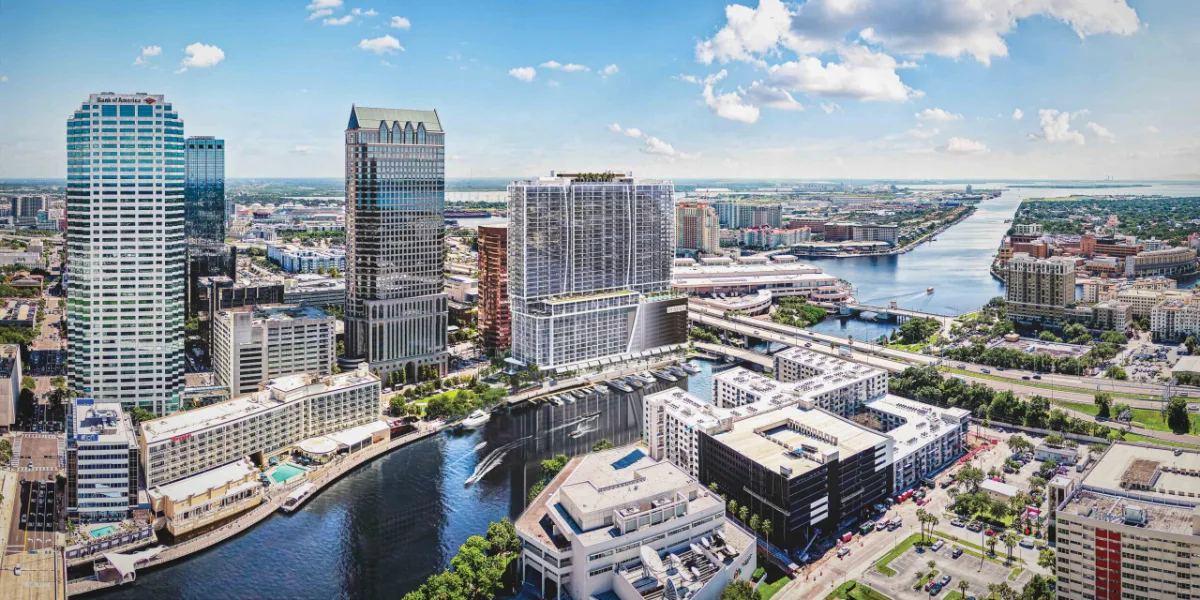
Aerial view of downtown Tampa skyline with residential neighborhoods and construction cranes showing market development activity amid the 2026 price correction

Every week, three people ask me the same question: "Is Tampa Bay's housing market crashing?"

And every week I give the same answer: it depends. Not because I'm dodging the question - because the Tampa Bay housing market in 2026 is genuinely complicated. And most of the "analysis" you'll find online is either cheerleading (from agents who need you to buy) or doom-scrolling (from media outlets that need your clicks).

Here's what the data actually says. No spin.

The numbers that matter - Tampa Bay's price decline hits harder than most metros

Tampa Bay home prices fell 6% in 2025 and are expected to continue declining into at least the first quarter of 2026. Tampa's average home value sits at roughly $376,000, down about 4.2% year over year according to Zillow. The broader Tampa-St. Pete-Clearwater metro is at $354,666, down 6%.

But here's the detail that changes everything: Tampa posted -3.9% on Case-Shiller through November 2025 - 13 consecutive months of annual declines, the steepest of any city in the national 20-metro composite index.

That's not a typo. Tampa led the entire nation in price declines for over a year straight.

Estate Vida Tip

Track Case-Shiller data, not Zillow estimates, for the most accurate price trends. Case-Shiller uses repeat sales methodology and lags by 2-3 months, but it's the gold standard for measuring true price movements.

The condo bloodbath that's driving Tampa Bay's correction

Here's the insight that changes everything: "the Tampa housing market" doesn't exist as a single thing. There are actually two very different markets happening right now.

Track 1 - Single-family homes: Prices are down only about 1.5% year over year in desirable locations. Inventory has increased, giving buyers more options and negotiating power, but we're not seeing distressed selling or panic.

Track 2 - Condos and townhouses: This is where the pain is. Condo prices have dropped roughly 12% year over year in the Tampa MSA. Supply has ballooned to 13.2 months - a clear buyer's market.

Condos and townhomes have been hit harder than single-family homes, with prices dropping 12% compared to 1.5% for detached homes. Why? There are simply more condos and townhomes for sale relative to demand. When supply builds up and homes take longer to sell, sellers are more likely to cut prices.

"In Manatee County, you have builder after builder throwing up all these houses, and there's not enough people to move down here," says local real estate agent Colleen Hockenberry.

How Tampa's correction compares to the rest of Florida

Miami has 9.7 months of supply. Orlando is declining. Jacksonville is down 2.8%. The entire state is recalibrating from the unsustainable price appreciation of 2021-2023.

Tampa's correction has been steeper than most, largely because of the condo oversupply and the outsized impact of Hurricane Helene on Pinellas County, where some flood-damaged homes are selling at 60-70% of pre-storm values.

Properties now take an average of 63 days to sell compared to 47 days last year. This gives buyers more time to shop around and negotiate, without feeling rushed to make a quick decision.

The market conditions tell the story: Over half of Tampa listings have price cuts. Homes are selling roughly 4% below list price on average. Days on market have stretched to 61-84 days depending on which source you trust, up from 47-54 days a year ago.
Why this isn't 2008 - the fundamentals that prevent a crash

Everyone's asking about 2008 comparisons, but a true crash requires prices to drop sharply across the board due to poor lending standards. Today, lending is strict, and home equity is at an all-time high.

The population engine is intact. Tampa Bay is projected to add 397,000-547,000 new residents through 2030. Tampa added 15,500 private-sector jobs in May 2025 alone. Unemployment sits at 3.5%.

Most existing homeowners are locked in. Roughly 70% of current homeowners have mortgage rates below 5%. They're not selling unless they have to, which limits distressed inventory.

This is actually a positive trend, a natural correction from an overheated period. During the pandemic, the median home price for the Tampa-St. Petersburg metro area rose by around $150,000 in just over two years. That's an unsustainable level of price growth. What we're seeing now is the Tampa housing market coming back down to earth.

The forecasts that can't agree - and what that tells us

Forecasts for 2026 vary widely, with Zillow predicting a modest 1.3% rebound while Realtor.com expects prices to fall another 3.6%. Realtor.com's 2026 Housing Market Forecast predicted that Tampa Bay home prices would decline by around 3.6% during 2026.

When the forecasters can't even agree on the direction, that tells you we're in a transitional market. My read: flat to slightly down for single-family, continued pain for condos, and strong performance in luxury.

The key catalyst to watch is mortgage rates. They're hovering around 6% right now. If they drop below 5.5%, there's significant pent-up demand that could unlock quickly.

What buyers and sellers need to know right now

What we're seeing is a normalization, not a collapse. Prices overshot during the pandemic. They're correcting to sustainable levels. That's healthy, even if it doesn't feel great if you bought in 2022.

If you're a buyer, this is the most negotiating power you've had in Tampa Bay since before the pandemic. More inventory, longer days on market, and sellers willing to make concessions.

If you're a seller, pricing correctly from day one is more critical than ever. The days of "list high and see what happens" are gone.

In 2021, buyers were waiving inspections. In 2026, sellers are paying for rate buydowns, covering closing costs, and agreeing to repairs.

My honest take: This correction was inevitable and necessary. Tampa Bay home prices needed to come back to reality after the 2021-2023 frenzy. The question isn't whether prices will fall further - it's how long this correction lasts and which neighborhoods recover first.

For buyers who've been waiting on the sidelines, 2026 might be your window. But don't expect 2019 prices. Even though Tampa Bay home prices declined over the past year, they're still 40% to 50% higher than before the pandemic. When combined with higher insurance costs, Tampa is no longer the affordable coastal market it once was.

Want to talk through your specific situation? Let's connect. No pressure - just data-driven insights about what this market shift means for your move.

Related Stories