You've probably seen the headline: Tampa Bay home prices are flat. The median for single-family homes has sat near $400,000 for over two years, and depending on which data source you read, prices are either down slightly or holding firm. The story sounds boring. It isn't.
The problem isn't that the number is wrong. It's that the number is doing real damage. Sellers are using it to anchor their asking price. Buyers are using it to decide whether to wait. Both groups are navigating a market that hasn't existed at the metro level for at least eighteen months.
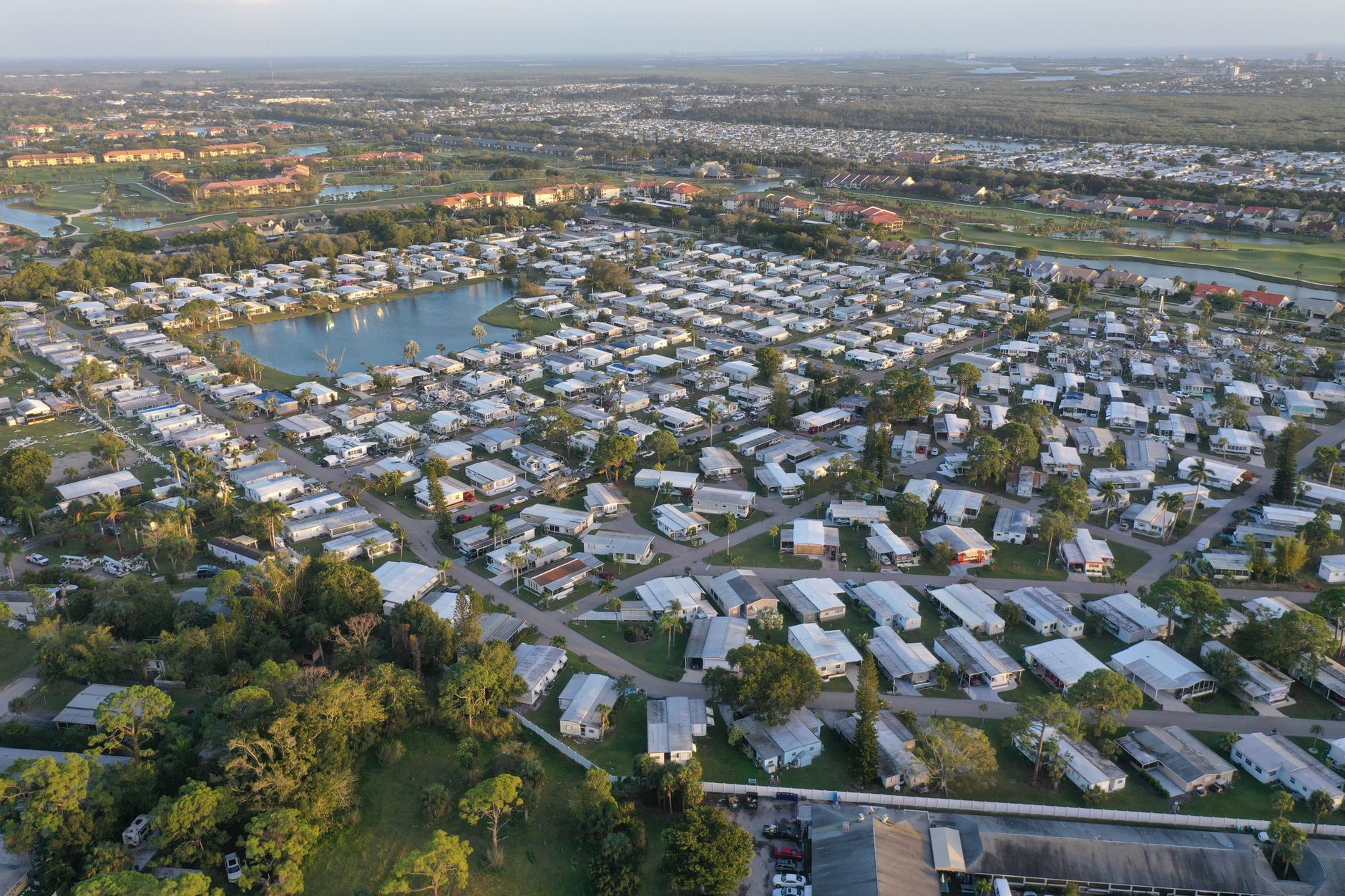
Tampa Bay is no longer one housing market. It's four or five markets stacked inside a single metro average - and that average is the worst tool anyone could use to make a neighborhood decision right now.
A flatlined metro median doesn't mean the market is calm. It means the gains and losses across neighborhoods are roughly canceling each other out at the aggregate level. What's underneath that number is anything but calm.
Zillow's current data puts the average Tampa home value at $376,278, down 4.2% year-over-year. Redfin's trailing three-month median shows $443K, down 1.4% from the same period last year, with homes now sitting on market for 41 days on average compared to 36 a year ago. Meanwhile, inventory across many Tampa Bay submarkets has reached its highest level since 2020, sitting at roughly 3.9 months of supply regionwide.
Those three numbers - price down, days up, inventory up - describe a buyer's market. But that's the metro story. Individual neighborhoods are writing completely different ones.
The metro average is the worst tool for making a neighborhood decision.
Estate Vida Tip
Before you accept or reject any list price based on what you've read about the Tampa market, pull the data for that specific zip code. Days on market and price-per-square-foot at the neighborhood level will tell you more in two minutes than any metro headline will in an hour.
Where the market is actually holding - and why
Some Tampa Bay submarkets are defying the metro correction entirely. Lutz is sitting at a $475,000 median, outperforming the broader market with constrained inventory in the Sunlake corridor and A-rated schools pulling consistent demand. Odessa commands the highest price-per-square-foot in the region at $231 per square foot, sustained by larger lots and buyers who prioritize finishes over price.
Wesley Chapel and parts of Pasco County are still generating multiple-offer situations on well-priced homes, even as the broader metro softens. The common thread isn't price point - it's supply constraint. Every neighborhood that's holding value has one thing in common: the inventory hasn't materially expanded, either because there's no land to build on, or because the school zones are actively pulling demand in faster than listings accumulate.
Where supply is constrained, the buyer's market simply doesn't exist. Sellers in Lutz, Odessa, and the better-rated school corridors of Wesley Chapel are still negotiating from a position of relative strength. The metro headline doesn't apply to them, and pretending it does is a negotiation mistake.
Estate Vida Tip
If you're selling in a supply-constrained neighborhood with strong school ratings, don't let the metro correction narrative talk you into an unnecessary price cut. Pull a 90-day absorption rate for your specific zip code first. If supply is under two months, you're not in the same market as the headlines.
Where the correction is real - and steeper than it looks
Tampa proper is a different story. The entry-point median sits around $389,000 with the deepest available inventory in the metro. Pinellas coastal product has been pressured for over a year by a combination of insurance cost increases, post-hurricane perception shifts, and buyers who can now afford to be selective. Homes sitting past 45 days are either mispriced or presenting poorly - there's almost no middle ground.
The segments feeling the most pressure aren't random. They cluster around specific risk characteristics: flood zone exposure, older roof ages that trigger 4-point inspection complications, and properties where the insurance quote is arriving as a deal-killer rather than a closing cost. I've watched buyers walk listings not because of price, but because the first insurance call came back at $18,000 annually. At that number, the mortgage payment becomes secondary.
In 2026, insurance is still underwriting the decision before price ever does. This isn't new, but it's getting more acute in the neighborhoods where inventory is stacking up - because those are often the same neighborhoods carrying the highest insurance friction.
Estate Vida Tip
If you're buying in Pinellas coastal areas, St. Pete Beach corridors, or anywhere with AE or VE flood zone exposure, get an insurance quote before you submit an offer - not during inspection. A $15,000 annual premium changes your debt-to-income ratio and your entire purchase calculus. Know the number first.
The neighborhood split that most analysis skips
Here's what almost no market commentary addresses: the divergence isn't just geographic. It's also structural - meaning the type of home matters as much as the zip code.
New construction in the metro's outer corridors is adding supply at a pace that's directly competing with resale in those same areas. Hillsborough, Manatee, and Pasco permit activity has remained elevated even as resale prices soften, which means resale sellers in those corridors are competing against builders who can still offer rate buydowns, design center incentives, and warranty coverage that no resale listing can match. That competition doesn't show up in median price data. It shows up in days on market and price reduction frequency.
Meanwhile, in infill neighborhoods like Seminole Heights, Ybor City, and parts of South Tampa, there's no new construction pressure because there's no land. Those markets are operating on a completely different supply-and-demand curve. A seller in Seminole Heights is not competing with DR Horton. A seller in Zephyrhills absolutely is.
- South Tampa and Hyde Park: Land-constrained, insurance-challenged on older stock, but lifestyle demand remains durable. Price sensitivity is real; quality sensitivity is higher.
- Seminole Heights and Ybor City: Infill, no builder competition, buyer pool is rate-sensitive but loyal to the neighborhood identity. Priced right, these move.
- Wesley Chapel and Lutz: Still absorbing demand well. School zones and new infrastructure are doing more work than any price adjustment could.
- Brandon and Riverview: Builder competition is real. Resale sellers need to be sharper on price and condition than at any point in the last four years.
- Clearwater and Dunedin coastal: Insurance friction and flood zone exposure are the lead variables. Buyers are doing the math differently than they were eighteen months ago.
Estate Vida Tip
If you're a resale seller in Brandon, Riverview, or any outer corridor where builders are actively selling inventory, visit two or three model homes before you list. Know exactly what the builder is offering at your price point and match or beat it on condition, closing cost assistance, or flexibility. You can't out-incentivize a national builder, but you can out-position one.
What the days-on-market number is really telling you
The regional average of 41 days is fine as a benchmark. But the distribution around that average is where the real signal lives. Homes in supply-constrained, school-strong neighborhoods are still clearing in under three weeks. Homes in oversupplied corridors with insurance friction are sitting 60, 75, even 90 days - and taking price reductions that didn't exist in the listing strategy to begin with.
That gap - call it the 21-day home versus the 75-day home - isn't random. It maps almost perfectly onto a combination of three variables: school zone quality, insurance accessibility, and new construction competition. When all three are favorable, homes move fast regardless of what the metro average is doing. When any one of the three is working against a listing, the market punishes it quickly.
Days on market is no longer just a pricing signal. It's a risk signal. A listing that's been sitting 60 days in this environment is telling you something beyond "overpriced." It's telling you the insurance, the flood zone, or the builder down the street is doing more work than the asking price.
Estate Vida Tip
Before writing off a listing that's been sitting 45-plus days, ask for the seller's current insurance policy and the flood zone designation. Sometimes the price reduction you're negotiating isn't the real fix - sometimes the real fix is understanding why previous buyers walked, and whether those reasons apply to you.
My read on this
I'd stop using the metro median for anything other than cocktail conversation. The $400,000 headline is technically accurate and practically useless for anyone trying to make a real decision in a specific neighborhood right now.
What I'm watching closely is the spread between school-zone-driven submarkets and builder-saturated outer corridors. That gap has been widening for about six months, and I don't see it closing until builder incentives pull back meaningfully or rates drop enough to bring the rate-locked move-up buyer back into the resale pool. Neither of those feels imminent.
For buyers, the honest advice is this: the market has handed you genuine negotiating room in the right zip codes. Use it. But don't confuse "the market is soft" with "every neighborhood is soft" - because some of the best-positioned sellers in this metro are still getting near asking and doing it in under 21 days.
For sellers, the question I'd ask before anything else is: which market am I actually in? If you're in Lutz or Odessa or a strong school corridor in Wesley Chapel, the metro correction story is noise. If you're in Riverview competing with builder move-in-ready inventory, it's not noise - it's your competitive reality. Pricing from the wrong assumption in either direction costs money.
Questions I'm hearing
Are Tampa home prices dropping in 2026?
At the metro level, prices are slightly down - somewhere between 1.4% and 4.2% depending on the data source and methodology. But that average masks sharp divergence: supply-constrained neighborhoods with strong school zones are holding or appreciating, while builder-saturated outer corridors and flood-exposed coastal product are seeing more meaningful softening.
Which Tampa Bay neighborhoods are still appreciating?
Lutz, Odessa, and Wesley Chapel are consistently outperforming the metro, driven by school zone demand and constrained inventory. Infill neighborhoods like Seminole Heights and parts of South Tampa are also holding up better than the headlines suggest, largely because there's no new construction competing against resale there.
How long are homes sitting on the market in Tampa Bay right now?
The regional average is around 41 days, up from 36 days a year ago. But that average is misleading - well-priced homes in demand corridors are still clearing in under three weeks, while listings in oversupplied areas or with insurance friction are regularly hitting 60 to 90 days before seeing price reductions.
Curious what the data actually looks like for your specific neighborhood? I'll pull the neighborhood-level numbers and send them over - days on market, price-per-square-foot, absorption rate, the works. No pitch, just the actual data.