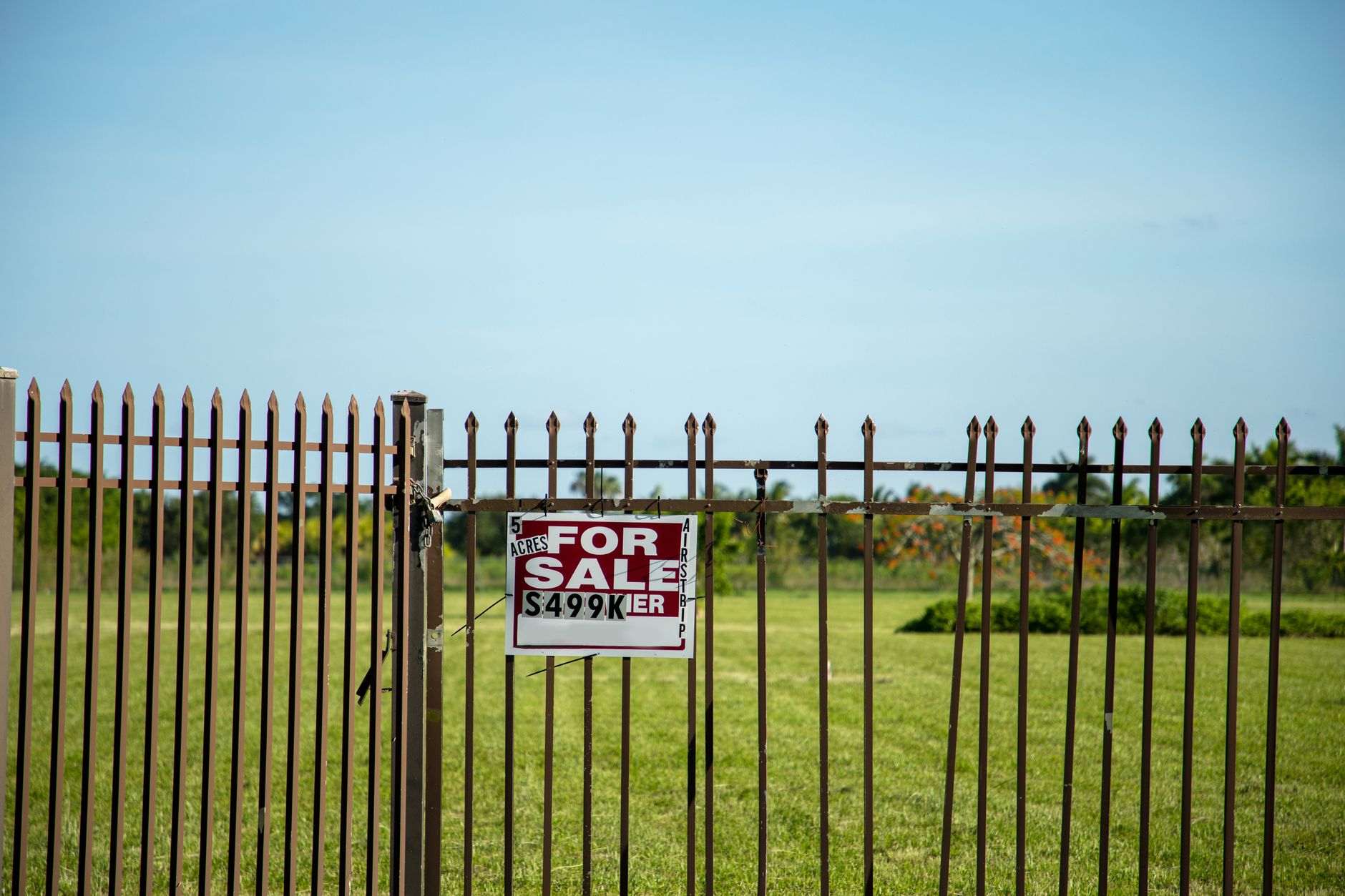
You've probably heard that Tampa Bay is a buyer's market now. More inventory, longer days on market, sellers giving ground. The narrative is basically right. But the way most sellers are responding to it is quietly costing them tens of thousands of dollars.
In February 2026, 45.9% of Tampa sellers cut their list price - the highest share among major U.S. metros, with an average reduction of $40,915 per listing, according to Redfin. That's not a market adjustment. That's a pattern. And the sellers making those cuts are often solving the wrong problem.
The issue isn't that sellers are negotiating. Negotiating is appropriate right now. The issue is that a price cut and a concession are not the same tool, they don't fix the same problem, and choosing the wrong one can leave a deal dead when it didn't have to be.
Why a price cut feels right but often isn't
When a listing sits, the instinct is to lower the number on the sign. It's visible, it's simple, and it feels decisive. But a price cut is a blunt instrument. It reduces what you net at closing, it signals to the market that the home wasn't priced correctly, and it does nothing to solve the actual friction most Tampa Bay buyers are facing right now.
Most buyers in this market aren't failing because the price is $415,000 instead of $390,000. They're failing because the monthly payment at 6.8% doesn't fit the budget. Those are different problems. One is solved by lowering the price. The other is solved by buying down the rate.
A seller who contributes $10,000 toward a 2-1 buydown doesn't just lower the buyer's rate - they lower the first-year payment by roughly $400 to $500 per month depending on loan size. That changes qualification math. That reopens a buyer pool that couldn't get approved at the prevailing rate. A price cut of the same $10,000 saves the buyer about $55 per month. Those are not equivalent moves, and sellers treating them as if they are are leaving deals on the table.
Before you authorize a price reduction, ask your agent to run two comparisons: what a $10,000 to $15,000 closing cost or rate buydown contribution would do to the buyer's monthly payment versus what the same dollar amount off the price achieves. In most rate environments above 6.5%, the buydown wins by a wide margin on payment impact - which is what's actually killing your buyer pool.
The concession menu most sellers don't know exists
Sellers in 2026 Tampa Bay have more tools than they're using. The conversation has collapsed into two options - hold firm or cut price - when the actual menu is much wider.
- 2-1 or 1-0 rate buydowns: Seller funds go into an escrow account that subsidizes the buyer's interest rate in year one and two. This directly improves qualifying ratios and monthly comfort without touching the sale price or the appraisal.
- Closing cost credits: Buyers in the $390,000 to $430,000 range often need $8,000 to $15,000 in cash to close after the down payment. A seller credit toward closing costs removes that barrier without changing the price the lender sees.
- Insurance and repair credits: Given that 4-point inspections, roof certifications, and wind mitigation reports are now deal-critical in Tampa Bay, a seller credit specifically earmarked for roof work or HVAC replacement can save a deal that would otherwise fall apart at inspection - without requiring a price adjustment that shows up on comps.
- Pre-paid HOA or CDD fees: In communities with CDD assessments - common in Wesley Chapel, Riverview, and Wimauma - prepaying a year of fees is a concrete, measurable incentive that reduces the buyer's first-year carrying cost without moving the sale price.
The sellers winning in this market aren't the ones cutting the deepest. They're the ones diagnosing exactly why their buyer pool isn't converting - and spending precisely where it fixes the problem.
If your listing is in a CDD community like Epperson, Bexley, or Waterset, ask your agent to calculate the buyer's total first-year cost including CDD, HOA, insurance, and taxes. That full number often surprises buyers and stalls deals. Offering to prepay the first year of CDD costs is a targeted, high-impact concession that costs you less than a blanket price cut and directly addresses the sticker shock that's killing showings.
Why the wrong price cut makes the second price cut inevitable
Here's what I've watched happen repeatedly in this market: a seller lists at $430,000, gets no offers in 30 days, cuts to $415,000. Still slow. Cuts again to $399,000. Sells at $392,000 after 90 days. Total reduction: $38,000.
That same seller, priced at $420,000 on day one with a $10,000 closing cost credit built into the marketing, might have closed at $420,000 within 21 days. Net to seller after the credit: $410,000. That's $18,000 more in the seller's pocket and 70 fewer days of carrying costs, stress, and market stigma.
The stigma piece matters more than most sellers realize. In a market where 45.9% of listings have taken a cut, a price reduction no longer signals a deal - it signals a problem. Buyers who've been watching Zillow and Redfin know the reduction history. They use it as leverage for a second negotiation. A well-structured concession offered upfront doesn't carry that baggage. It looks like a seller who understands the market, not a seller who overreached.
Every price reduction after 30 days on market costs you twice: once in the actual dollars, and again in the negotiating credibility you lose with every new buyer who looks up your listing history.
If you've already taken one price reduction and the listing is still sitting, resist the reflex to cut again immediately. Instead, have your agent pull the showing feedback and identify whether the issue is price or terms. If buyers are showing up but not offering, a concession - not a price cut - is almost certainly the right next move. If showings have stopped entirely, the price itself needs to move.
The neighborhoods where this matters most right now
Not every Tampa Bay submarket is behaving the same way, and the right concession strategy depends on where you are.
In South Tampa and Hyde Park, inventory is tighter and well-priced homes in good condition still move without heavy concessions. The problem here tends to be overpricing relative to condition, not financing friction. Price accuracy matters more than concession strategy.
In Wesley Chapel, Riverview, and Land O' Lakes, new construction competition is the primary threat to resale sellers. Builders are offering rate buydowns as low as the high 3% range through preferred lenders on select inventory homes. A resale seller competing in this corridor without a buydown contribution is asking a buyer to choose a higher effective rate to live in a used home. That's a hard sell when the builder down the street is making the math work.
In Seminole Heights, Carrollwood, and parts of New Tampa, days on market have extended and the buyer pool has gotten pickier about condition. Insurance eligibility is a real constraint here - a home with a 15-year-old roof is already facing buyer hesitation before the price conversation begins. A seller credit toward roof replacement or a wind mitigation upgrade closes deals that price cuts alone can't.
In Clearwater, Dunedin, and coastal Pinellas, flood zone and insurance cost are the primary deal-killers. Offering a credit that specifically covers the buyer's first-year insurance differential or a flood policy prepayment is a targeted tool that addresses the actual friction. Lowering the price by $20,000 doesn't make a $6,000 annual insurance bill any more digestible.
If your home is in a coastal Pinellas flood zone, get a current elevation certificate before listing and have your agent calculate what the buyer's flood insurance cost will be under Risk Rating 2.0. Then structure a seller credit specifically framed as "first-year insurance assistance." This tells a nervous buyer that you've already done the homework and you're helping them absorb the hardest cost. That framing closes deals.
My read on this
The data is clear that Tampa Bay sellers are negotiating more than they have in years. What's less clear is whether they're negotiating intelligently. Cutting price is the path of least resistance - it's easy to understand, easy to authorize, and it feels like action. But in a market where most buyers are rate-constrained rather than price-constrained, it's often the least efficient dollar you can spend.
I'd be watching specifically for sellers in the new construction corridors - Wesley Chapel, Riverview, Wimauma, and outer Hillsborough - who are trying to compete with builders purely on price. That's a race you don't win. Builders have more margin, more financing tools, and more patience. The resale sellers who are closing deals in those corridors are the ones who've gotten creative about what they're offering, not just how low they'll go.
If I were selling in this market today, I'd want to understand my buyer pool's actual constraint before I touched the list price. Are my showings stopping because of price, or because of payment? Because of condition, or because of insurance? The answer to that question determines whether you need a price cut, a buydown contribution, a repair credit, or just better marketing. Most sellers never ask it. They just cut and hope.
Questions I'm hearing
Should I cut my price or offer a concession in Tampa's current market?
It depends on why your home isn't selling. If buyers are visiting but not offering, a concession like a rate buydown or closing cost credit usually solves the problem faster and at lower net cost to you. If showings have dried up entirely, the price itself needs to move. These are different diagnoses requiring different fixes.
How much are Tampa sellers giving back in concessions right now?
Data from early 2026 shows the average Tampa Bay price reduction was roughly $40,000 per listing among homes that cut. Concessions vary widely, but closing cost credits of $8,000 to $15,000 and rate buydown contributions of $10,000 to $15,000 are increasingly common in contracts - particularly in suburban corridors competing with new construction.
Are Tampa home prices dropping in 2026?
Prices have softened modestly. Zillow's index shows Tampa values down about 4.2% year-over-year, while the median sale price for single-family homes in the broader Tampa Bay area sits near $420,000 - roughly flat for two years. The bigger story isn't the price level; it's how much sellers are giving back through reductions and concessions after listing.
Curious about where your home sits in this market? I'll pull the actual concession and reduction data for your neighborhood and tell you what's working - not just what's being offered. No pitch, just numbers you can actually use. Reach out anytime.