Back to all stories
Market Analysis

Tampa Bay's median price hasn't moved in 2 years - and that's the most important number sellers keep ignoring

Ryan Snyder

Ryan Snyder

Team Leader, Estate Vida Team

September 1, 20267 min read
Tampa Bay's median price hasn't moved in 2 years - and that's the most important number sellers keep ignoring
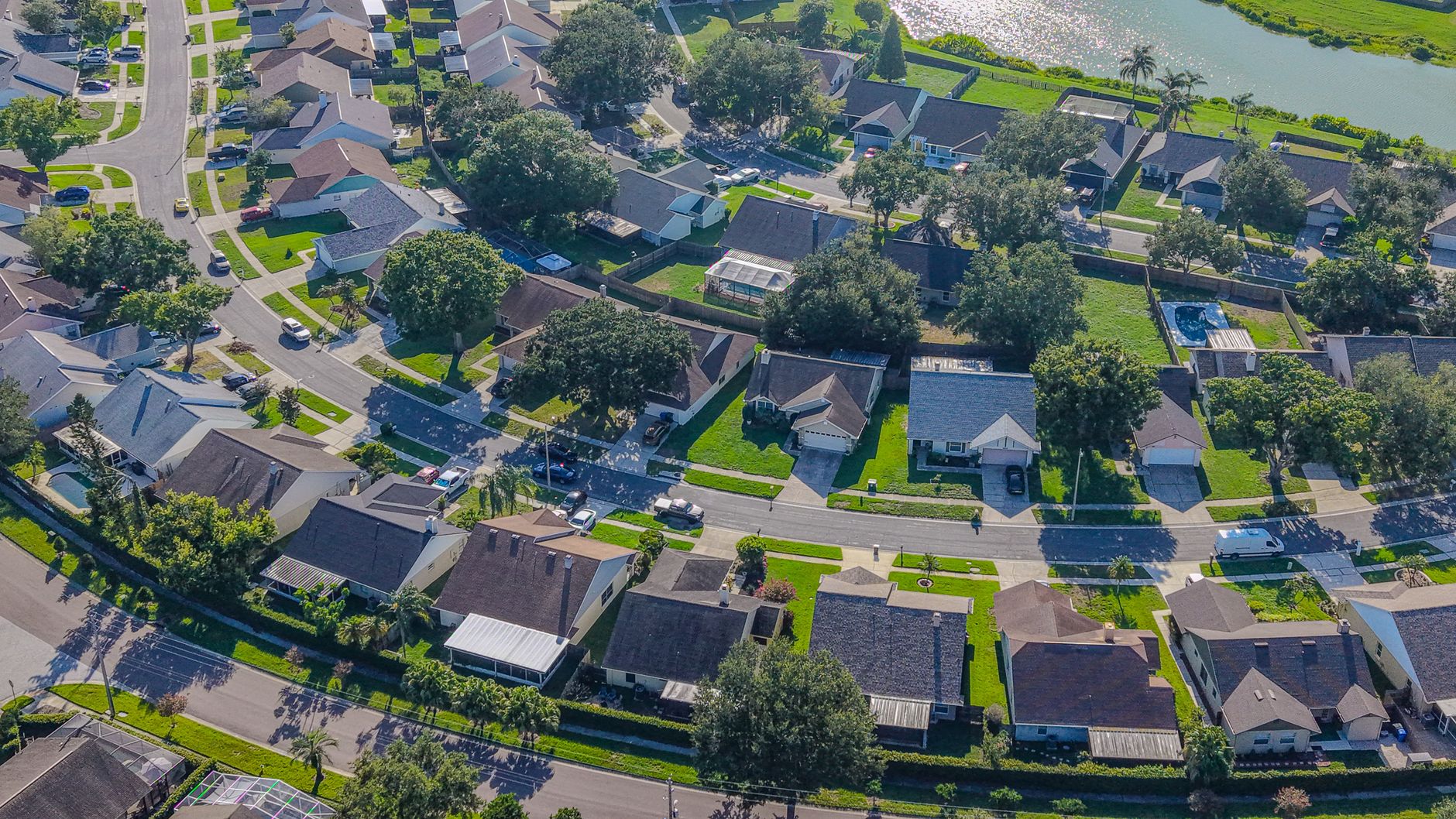
Aerial view of a South Tampa residential street with mix of updated bungalows and larger newer homes, showing the contrast between older stock and renovated properties in a mature, tree-lined neighborhood.

You've probably heard that the Tampa Bay market is "softening." You've also probably heard it's "stabilizing." Both camps throw around median prices, year-over-year comparisons, and inventory counts. Neither group is telling you the most useful thing hiding inside the data right now.

The median sale price for a Tampa Bay single-family home has sat near $420,000 to $435,000 for more than two years. Not falling. Not rising. Just... parked. Meanwhile, days on market just climbed from 56 to 69 days year-over-year - a 23% increase in the time it takes a home to sell. Those two numbers don't usually move in opposite directions unless something structural is happening.

Here's what's actually going on: the market didn't get slower. Sellers got more expensive. And the gap between what sellers are asking and what 2026 buyers will actually pay is the only thing dragging that days-on-market number higher.

Why a flat price line is not a neutral signal

A median that hasn't moved in two years sounds boring. It isn't. A flat median in a market with rising inventory, rising carrying costs, and a 23% longer time-to-sell is quietly telling you that price discovery is broken on the seller side. Buyers know what homes are worth. Sellers are still guessing based on their neighbor's 2022 sale.

The median price staying flat while days on market climbs is not stability - it's friction. It means the homes that are selling are anchoring the median in place, while a growing pile of overpriced listings accumulates days and eventual price cuts before they finally transact.

The sale-to-list ratio across Tampa Bay sits at 98.4% - which sounds healthy until you realize that number only captures homes that actually close. It says nothing about the listings that sat for 90 days, cut their price twice, and eventually sold after the seller's negotiating position evaporated. That 98.4% is a survivor statistic, not a market-wide one.

Estate Vida Tip

If you're a seller reviewing comps, look specifically at homes that sold within 30 days. Those are the comps that reflect current buyer willingness - not homes that sat 60 or 90 days before closing. A comp that took 85 days to sell is a data point about mispricing, not market value.

The neighborhoods where this gap disappears

Here's where the metro average becomes actively misleading. South Tampa's average sale price over the most recent 30-day period came in at $1,089,135 - and days on market actually dropped 14.1% in that same window. Westchase, Carrollwood, and South Tampa are still moving well-priced listings in 21 to 35 days. The 69-day metro average isn't their reality.

Those neighborhoods share something: constrained resale supply, strong school ratings, and buyers who are making long-term lifestyle decisions rather than speculative ones. Demand there is relatively inelastic to small price differences because buyers aren't interchangeable with Brandon or Riverview buyers. They came specifically for the zip code.

The metro average is not a market. It's an average of a dozen separate markets that happen to share a bay.

Contrast that with suburban corridors where new construction is still competing for the same buyer pool. In those areas - parts of Wesley Chapel, Riverview, and portions of Brandon - a resale home priced at 2022 levels isn't competing with 2022 comps. It's competing with a builder offering a rate buydown, a finished model home, and a warranty. That's a different equation entirely.

Estate Vida Tip

Buyers targeting Westchase, Carrollwood, or South Tampa: don't use metro-wide days-on-market data to calibrate your offer strategy. In those submarkets, well-priced listings still move quickly. Coming in 5-6% below ask on a correctly-priced South Tampa home is likely to cost you the deal, not save you money.

Why the list price is lying to buyers - and sellers

The median list price for houses in Tampa currently sits at $500,000, compared to $489,994 a year ago. The median sale price is roughly $435,000. That's a $65,000 spread between what sellers are asking and what buyers are paying. That gap doesn't exist because buyers are lowballing. It exists because a significant portion of listings are priced for a market that no longer exists.

I've watched buyers get discouraged when they see list prices above their budget, then learn later that the home sat for 75 days and sold well within range. The list price has become aspirational fiction for a portion of the market. The sale price is the actual signal.

When list prices diverge that far from sale prices, the buyer who understands the gap has a structural advantage over the buyer who doesn't.
Estate Vida Tip

Before making an offer, ask your agent to pull the original list price, current list price, and days on market for every active listing you're considering. Any home that has been reduced at least once and has been sitting 45+ days is a negotiation opportunity, regardless of what the current ask says.

What the condo data is adding to this story

The divergence becomes even sharper when you separate single-family from condos. The median list price for condos in Tampa has dropped from $345,000 to $309,200 year-over-year - a 10.4% decline in asking prices in a single year. That's not a softening. That's a repricing, driven by a combination of factors: post-Surfside milestone inspection requirements, surging HOA special assessments, and insurance costs that are eating into buyer qualification at the monthly payment level.

Condo sellers who are watching single-family comps to price their unit are looking at the wrong dataset. Those markets are moving in opposite directions right now, and the condo side is where pricing anchored to last year's reality is most likely to result in a listing that simply doesn't move.

Estate Vida Tip

If you own a condo and are considering selling in the next 12 months, request the building's most recent reserve study and insurance renewal terms before listing. Buyers will ask for them - and if the numbers are bad, pricing ahead of that discovery is better than negotiating it away after you're already under contract.

My read on this

The Tampa Bay market isn't broken. It's bifurcated by seller behavior more than it is by actual demand. The buyers are out there - 1,653 homes sold in Tampa in June alone, up from 1,516 the prior year. Volume is not the problem. The problem is that a meaningful chunk of the active inventory is priced as though that volume is competing for 2022-era homes, and it isn't.

If I were selling today, I'd price to the sale comps from the last 30 days - not the last 90, and certainly not the last 180. The market has been flat for two years, which means anything older than 30 days is already stale enough to distort your strategy. I'd also pay close attention to the days-on-market curve in my specific neighborhood, not the metro number. Those are different conversations.

If I were buying today, I'd identify listings that have been on market 45 days or more with at least one price reduction. That's not a problem property - in most cases, it's a motivated seller who has already done the psychological work of accepting today's prices. That's the profile where negotiation actually happens.

The flat median tells me the floor is holding. The rising days on market tells me the ceiling is lower than many sellers think. The spread between those two things is exactly where the opportunity sits right now - for buyers patient enough to find it.

Questions I'm hearing

Are Tampa home prices dropping in 2026?

Not in any meaningful way for single-family homes. The median sale price has held near $420,000 to $435,000 for over two years. What's changing is days on market, which have climbed 23% year-over-year, signaling that overpriced listings are sitting longer before sellers adjust to where buyers actually are.

Is it a buyer's or seller's market in Tampa right now?

It depends heavily on the neighborhood and price point. Inventory is around 3.8 months of supply metro-wide - technically still a seller's market, but meaningfully more balanced than 2021-2022. Well-priced homes in South Tampa, Westchase, and Carrollwood still sell in under 35 days. Overpriced listings in suburban corridors competing with new construction can sit for 90 days or more.

How long does it take to sell a home in Tampa in 2026?

The metro average is 69 days, up from 56 days last year. But that average is being dragged higher by overpriced listings. Correctly priced homes in high-demand neighborhoods like Carrollwood, Westchase, and South Tampa are still clearing in 21 to 35 days. Price positioning matters far more than market timing right now.

Curious where your neighborhood actually stands? I'll pull the current days-on-market, sale-to-list ratios, and active inventory for your specific area and send it over. No pitch - just the numbers you need to make a clear-headed decision.

Related Stories