You've probably heard that Tampa Bay prices are softening. That's technically true. But it's the least useful version of the story.
The real story is that Tampa Bay now has two housing markets operating under completely different rules, with completely different risk profiles, and completely different buyer pools. One of them is struggling in a way that most buyers and sellers haven't fully processed yet.
The condo market isn't just weaker than single-family. It's a different asset class now. And if you're buying, selling, or holding a condo in Tampa Bay right now, the analysis you need looks nothing like what the metro-level headlines are giving you.
What the numbers actually show when you separate the two markets
The metro average blurs everything. When you break it apart, the divergence is striking.
Single-family homes in Hillsborough County are holding near a $408,000 median, with modest year-over-year movement and days on market that have extended but remain manageable. The condo and townhouse segment is a different story entirely: prices are down roughly 12% year-over-year in the Tampa MSA, and supply has ballooned to approximately 13.2 months - nearly triple what economists define as a balanced market.
For context, the metro average is the worst tool for making a neighborhood decision. A buyer comparing a Channelside condo to a Carrollwood single-family home isn't making one decision. They're making two completely different financial bets on two completely different asset types with completely different structural risk.
Thirteen months of condo supply doesn't just mean prices are soft. It means sellers are competing with dozens of near-identical units, and buyers hold all of the leverage.
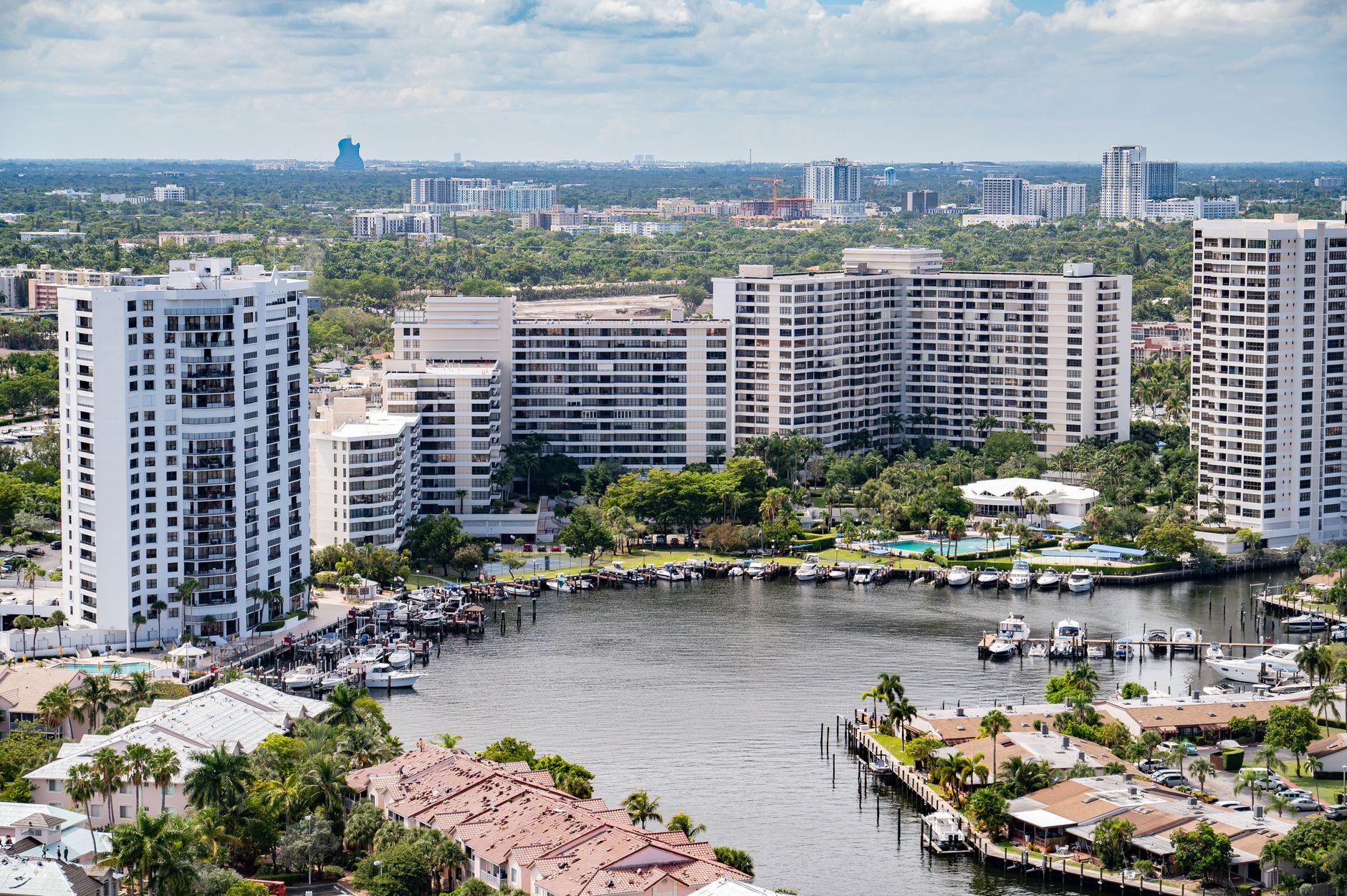
If you're shopping condos in St. Petersburg, Channelside, or any waterfront building, pull the active listing count by building - not just by zip code. Some buildings have 10+ units listed simultaneously. That's not a soft market; that's a distressed building dynamic, and it changes your negotiation entirely.
Why the reserve law is the actual engine behind this split
The Florida condo reserve law - SB 4D, now fully enforced after its phased rollout - requires condo associations to fully fund structural reserves based on independent engineering studies. For thousands of buildings across Tampa Bay, that mandate has landed like a financial shock. Associations that spent years underfunding reserves are now passing assessments, raising monthly dues, or both.
The downstream effect on listings is direct. Sellers who received special assessment notices are listing before the bill arrives. Buyers who do their due diligence are finding HOA financials that would have been invisible two years ago - and walking away. Lenders are increasingly flagging buildings with underfunded reserves or pending assessments, which removes a portion of the buyer pool entirely for affected properties.
This is why the condo supply number is so elevated even as single-family inventory remains comparatively tight. It's not a demand problem across the board. It's a structural problem concentrated in one asset type that's now visible in the data.
Before making any offer on a Tampa Bay condo, request the most recent reserve study, the current reserve funding percentage, and the meeting minutes from the last 12 months. If minutes reference any discussion of a special assessment, treat it as a contingency item - not a footnote. A building with reserves funded at less than 50% of the required level carries real financial risk that doesn't show up in the purchase price.
Insurance is doing the rest of the damage
The reserve law gets most of the attention. But insurance is quietly doing equal damage to condo affordability, especially in coastal and waterfront buildings.
Building-level master policies in older Tampa Bay condo towers have seen dramatic premium increases since Hurricanes Helene and Milton in 2024. When a building's master policy spikes, that cost passes directly to unit owners through HOA dues. I've watched buyers make offers on condos in South Tampa and Clearwater Beach, then back out after reviewing HOA financials showing dues increases of 30 to 50 percent over two years. The purchase price looked attractive. The carrying cost math did not.
Buyers also need to account for their own unit-level HO-6 policy on top of the building's master coverage. In flood-zone buildings, that HO-6 cost plus flood insurance can add several hundred dollars a month to total ownership cost - a number that rarely appears in listing descriptions but absolutely shapes real-world affordability.
Insurance is deciding more deals than price right now in the Tampa Bay condo market. The list price gets buyers in the door. The insurance cost gets them back out.
Ask the listing agent for the current HOA dues, the dues 24 months ago, and the building's master insurance carrier. If the association has moved to Citizens or a surplus-lines carrier in the last two years, that's a signal worth investigating. It means the private market has already repriced or exited the risk on that building.
Who actually has opportunity here - and where
Here's where I'd push back on the doom framing. A 13.2-month supply and 12% price declines aren't only bad news. They create a specific, well-defined window for a specific type of buyer.
Cash buyers who plan to hold for 7 to 10 years and can absorb a near-term assessment without panic are looking at genuinely attractive entry prices in some Tampa Bay condo submarkets. Buildings in Seminole Heights, Ybor City, and parts of St. Petersburg that are newer construction - generally post-2010 - carry significantly lower reserve risk than older waterfront towers. They also tend to carry lower insurance exposure because of modern building codes, impact-resistant windows, and updated roofing systems that qualify for wind mitigation credits.
The buildings that are struggling are largely pre-2000 construction in flood zones, especially anything beachside in Pinellas County or on the waterfront in downtown St. Pete and Tampa. The differentiation between a well-run newer building and a financially distressed older tower matters more right now than it has in a generation.
- Newer construction inland (post-2010): Lower reserve risk, better insurance terms, more buyer-pool access through conventional financing. These are the condos where negotiation leverage exists but the floor is more stable.
- Older waterfront (pre-2000): Highest assessment risk, highest insurance exposure, shrinking lender eligibility. Even at discounted prices, the ongoing carrying cost math is often unfavorable unless the buyer is all-cash and fully eyes-open.
- Mid-tier buildings with partially funded reserves: This is the gray zone. The reserve law creates a compliance deadline, and some of these associations are still working through their funding plans. These buildings could stabilize or could face sudden assessment shock depending on the board's decision-making. They require the deepest due diligence.
If a condo building passes your reserve and insurance review, run a quick lender eligibility check before you fall in love with the unit. Fannie Mae and Freddie Mac maintain lists of project approvals, and many Tampa Bay buildings with ongoing special assessments or low owner-occupancy ratios don't qualify for conventional financing. That matters even if you're financing, because it matters to your eventual buyer too.
What sellers in this market need to understand immediately
If you own a Tampa Bay condo and you're thinking about selling, the single most important thing I'd tell you is this: your competition isn't just the unit down the hall. It's the full 13.2 months of inventory across the submarket, which includes units priced aggressively by sellers who received assessment notices and need to move fast.
The buyers who are still active in this market have done their homework. They know about the reserve law. They know how to read HOA financials. They're asking harder questions than condo buyers asked three years ago. Sellers who can demonstrate a well-funded reserve, a stable HOA, a clean 4-point inspection result, and transferable wind mitigation credits will separate themselves from the inventory pile. Those who list without that documentation are competing on price alone - and that's a race they won't win easily against motivated sellers in the same building.
Pricing a condo 5 to 8 percent below peak isn't pessimism. In this environment, it's often the fastest path to an actual closing.
My read on this
The Tampa Bay condo market is going through something that doesn't have a clean historical parallel locally. The reserve law created a forced disclosure mechanism that the market is still absorbing. Insurance costs layered on top. And the result is a segment of the housing market where the headline price is almost less important than the three documents you read before you make an offer.
I'm watching newer inland buildings in St. Pete and the Tampa urban core with real interest. If you can find a post-2010 building with reserves funded above 70 percent, a stable dues history, and a non-flood-zone location, the price correction has created entry points that I don't think will last indefinitely. The buyer pool for those units is smaller than it used to be - mostly because people are painting the whole condo market with the same brush. That gap between perception and reality is usually where the actual opportunity sits.
What I'd avoid right now, unless I were an all-cash buyer with serious reserves of my own: anything pre-2000 in a coastal flood zone where the HOA financials show reserve funding under 40 percent. The discount on that unit isn't necessarily wrong. It may just be the market accurately pricing in an assessment that hasn't been announced yet.
If you're a current condo owner sitting on the fence, I'd think hard about your timeline. The buyers who are active right now are savvy and patient. If your building's financial story isn't clean, that negotiating dynamic only gets harder the longer supply stays elevated.
Questions I'm hearing
Are Tampa Bay condo prices going to keep dropping?
At 13.2 months of supply and with the reserve law still creating new listings from sellers ahead of assessment notices, further softening in older or financially distressed buildings is likely. Newer, well-run buildings in desirable non-flood locations are more insulated. The market isn't monolithic, and the trajectory depends heavily on which building type you're watching.
What is the Florida condo reserve law and how does it affect buyers?
SB 4D requires condo associations to fully fund structural reserves based on independent engineering inspections, ending decades of waived reserve contributions. For buyers, it means HOA dues are rising in many buildings and some are issuing special assessments. Always request the current reserve study and funding percentage before making an offer - an underfunded building is a hidden financial liability that doesn't appear in the listing price.
Is it a good time to buy a condo in Tampa Bay?
It depends almost entirely on the specific building. Newer post-2010 construction with solid reserve funding and manageable insurance costs offers genuine value at today's corrected prices. Older coastal buildings with underfunded reserves and elevated insurance exposure carry risks that may outweigh the discount. Do the building-level due diligence before evaluating the unit price.
Thinking about a specific building or neighborhood? Send me the address and I'll pull together the actual listing data, HOA financials available in the public record, and a real read on where it sits in this market. No sales pitch - just the numbers you need to make a clear-eyed decision.