You've probably heard that Tampa Bay's housing market is "stabilizing." Prices flat. Buyers cautious. Everyone waiting for the next rate move. That's the headline version, and it's not wrong - it's just incomplete.
Here's what the stabilization story leaves out: while resale sellers and buyers negotiate cautiously, builders have been building aggressively. Tampa issued 2,300 new construction permits in June 2026 worth $757.75 million - more than any other region in Florida. Statewide, permits jumped 17% month-over-month from May to June. That's not a soft market signal. That's a statement.
The real question isn't whether builders are busy. It's what happens to every resale listing in Wesley Chapel, Carrollwood, and New Tampa when a new home a few miles away comes with a 3.99% rate and $60,000 in savings attached to it.
Why builders are winning a fight resale sellers don't know they're in
Most resale sellers think they're competing with the house down the street. They're not. They're competing with Lennar, D.R. Horton, Del Webb, and M/I Homes - and those builders are running promotions that would be illegal to ignore if you were in any other industry.
Right now, across Tampa Bay's active builder communities, the incentive stack looks like this:
- Del Webb: Save up to $70,000 plus rates as low as 3.99% on select homes.
- Highland Homes: Up to $60,000 in savings across select communities.
- Lennar: $30,000 in limited-time savings with rates as low as 3.99% (7.170% APR).
- M/I Homes: First-year rates as low as 2.875% on 2/1 buydown FHA mortgages for quick move-in homes.
- D.R. Horton: Ongoing closing cost credits and price reductions across multiple communities.
These aren't fringe programs. A national NAHB survey from August 2026 found that 63% of builders nationwide are currently using sales incentives, and 35% have cut prices outright, with an average reduction of 6% among those who did. The builders working Tampa Bay are not the exception.
The sticker price on a new construction home is almost never the real price - and most resale sellers are still being priced against it.
If you're a resale seller in Wesley Chapel, Wiregrass, or any corridor with active builder communities, pull the incentive sheets from the three closest new construction projects before you set your list price. Your true competition isn't the resale comp - it's the new build with a $40,000 credit and a 4% rate baked in. Price accordingly or offer something a builder can't: an established neighborhood, a mature lot, no CDD fee, and a faster close.
What the permit number actually means neighborhood by neighborhood
2,300 permits in a single month is a lot. But that number is unevenly distributed, and that's where it gets strategically interesting.
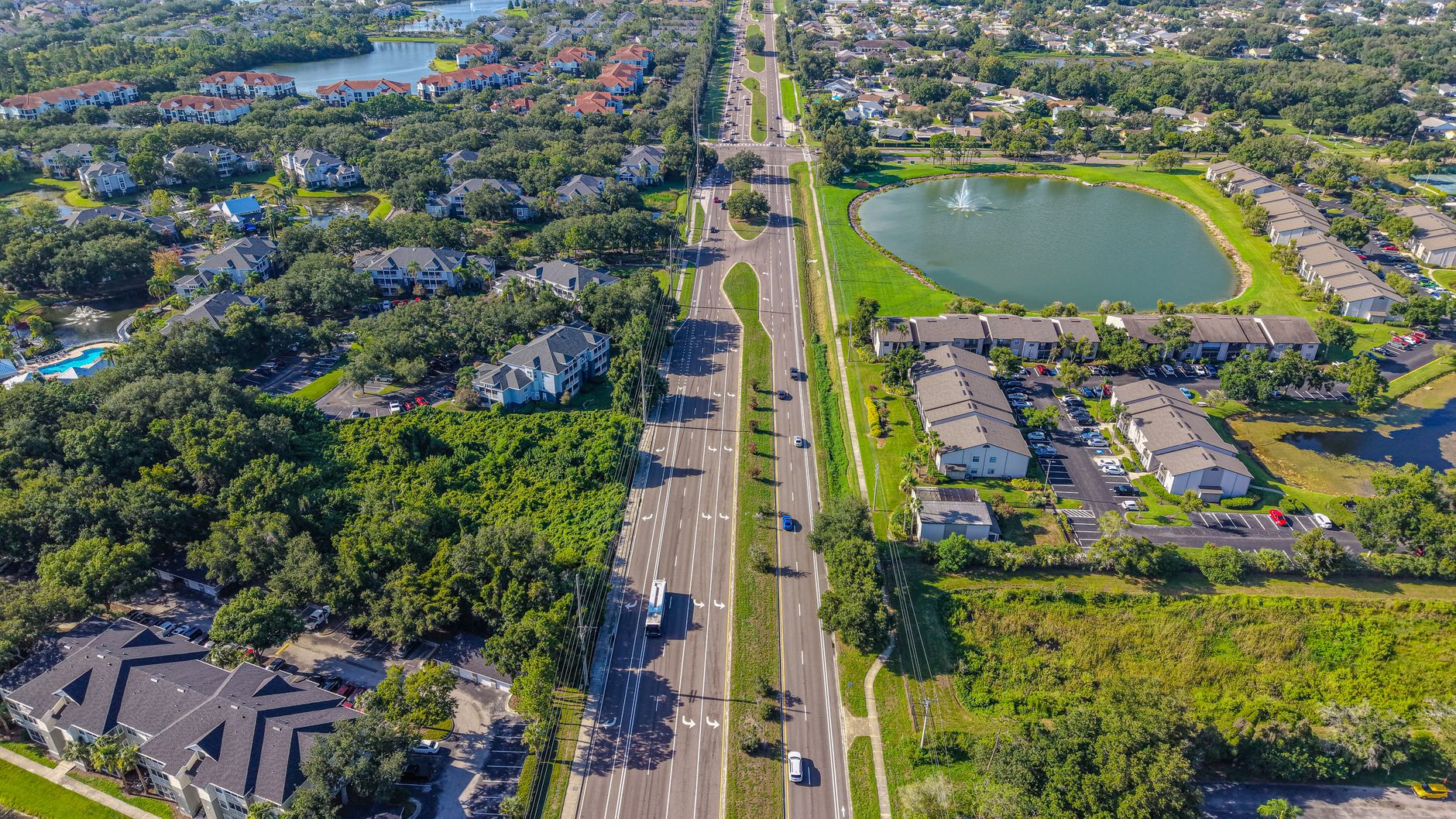
The bulk of Tampa Bay's new construction activity is concentrated in the outer growth corridors: Wesley Chapel, Parrish, Wimauma, Ruskin, and parts of east Brandon. These are the areas where land is available, infrastructure is expanding, and builders have the room to operate at scale. The infill markets - South Tampa, Hyde Park, Seminole Heights, Dunedin, and most of St. Petersburg - see far fewer permits and far less builder competition.
That distinction matters enormously for resale pricing. In South Tampa, you're not competing with a builder. In Wesley Chapel, you absolutely are. A resale home in Carrollwood isn't threatened the same way a resale home in Wiregrass Ranch is. The metro-wide permit number tells you builders are active. The neighborhood tells you whether that activity is your problem.
Hillsborough County's single-family resale market currently sits at 3.6 months of supply with a median price of $426,000 - still technically balanced. But balanced at the county level can mask a very different reality at the zip code level when you factor in what builders are offering two exits down the highway.
Buyers comparing resale to new construction in the outer corridors should run a true monthly payment comparison, not a price comparison. A $480,000 new build with a 3.99% rate buydown can have a lower monthly payment than a $430,000 resale at prevailing market rates. Ask your lender to model both scenarios with identical down payments before you decide which direction to negotiate.
The hidden costs builders don't put in the headline
Builder incentives are real. They're also not the full picture, and I've watched buyers get surprised by what happens after closing on a new build.
The three costs most buyers underestimate in Tampa Bay's new construction communities:
- CDD fees: Community Development District fees are common in master-planned communities across Wesley Chapel, Parrish, and Riverview. They appear as a line item on your annual property tax bill and can run $1,500 to $4,000 per year. They're not optional and they don't go away when the community is built out.
- Insurance: A brand-new home built to current Florida code with impact-rated windows will generally cost less to insure than a 1980s resale - that's a real advantage. But new construction in flood-prone corridors still carries flood insurance requirements under Risk Rating 2.0 that can add $1,800 to $4,000 annually depending on elevation. Don't assume "new" means "cheap to insure" without pulling actual quotes first.
- The preferred lender trap: Builder incentives are frequently tied to using the builder's preferred lender. That's not inherently bad, but it's not inherently good either. The incentive can be worth it. It can also result in a rate or fee structure that costs you more over five years than you saved at closing. Get a competing Loan Estimate from an outside lender before you commit.
The incentive is real. The question is whether it survives the full cost stack.