
.svg)


You found the house. You ran the numbers on a mortgage calculator. The monthly payment looks doable. You're ready to make an offer.
Then your lender sends over the real numbers. And suddenly your comfortable $2,100/month mortgage is actually $3,500-$3,900/month when you factor in everything else.
This happens to Tampa Bay buyers all the time. And it's not because they're bad with money - it's because nobody told them about the costs that don't show up on Zillow's mortgage calculator.
Let me break down exactly what you're looking at on a $400K home in Tampa Bay, so nothing catches you off guard.
The full cost stack - what $400K really costs per month
Here's what a realistic monthly budget looks like on a $400,000 home in Tampa Bay with 10% down at a 6% rate:
- Mortgage (principal + interest): ~$2,158/month
- Property taxes (with homestead exemption): ~$573/month
- Homeowners insurance: ~$375-$450/month
- Flood insurance (if applicable): ~$58-$150/month
- HOA (if applicable): ~$250-$400/month
- CDD (if applicable): ~$100-$200/month
Total potential monthly cost: $3,514-$3,931
That's $1,356-$1,773 per month more than the mortgage payment alone. Over a year, that's up to $21,276 in costs that don't show up in the basic calculation.
Let's break each one down.
Property taxes and the "Save Our Homes" trap
This is the single biggest hidden cost - and the one that confuses buyers the most.
Florida's homestead exemption caps annual property assessment increases at the lesser of 3% or the Consumer Price Index. That sounds great, and it is - for existing homeowners. But here's the catch:
When you buy a property, the assessed value resets to full market value.
That means your property tax bill can be double or triple what the previous owner was paying. Here's a real example:
The previous owner bought the house for $200K years ago. Thanks to Save Our Homes, their assessed value is capped at $180K. They're paying taxes on $180K. You buy the same house for $400K. On January 1st, the assessed value resets to $400K. Your taxes are based on $400K - not $180K.
That difference can be $4,000+ per year more than what the seller was paying. And it's completely invisible until you get your first tax bill.
The City of Tampa's total millage rate is approximately 19.71-19.84 mills. Hillsborough County's effective rate runs about 1.27% of assessed value - among the top 10 highest in Florida. On a $400K home with homestead, you're looking at roughly $6,881/year in property taxes.
Homestead exemption - file it or lose it
The homestead exemption reduces your taxable value by up to $50,722 (as of 2025, adjusted annually by CPI per Amendment 5). Here's how it works:
The first $25,000 of assessed value is exempt from all taxes including school district levies. There's an additional exemption on assessed value between $50,000 and $75,722 for non-school taxes.
Estimated annual savings: $800-$1,000+ depending on your millage rate.
The deadline to file is March 1 for the current tax year. Miss it and you lose the exemption for that entire year. I've seen buyers lose $900+ because they didn't file on time.
One more thing most people don't know: portability. If you already own a Florida home with a homestead exemption and you're moving to a new one, you can transfer up to $500,000 of your Save Our Homes benefit to the new property - as long as you do it within 3 tax years. This can save you thousands.
CDD fees - the newcomer's surprise
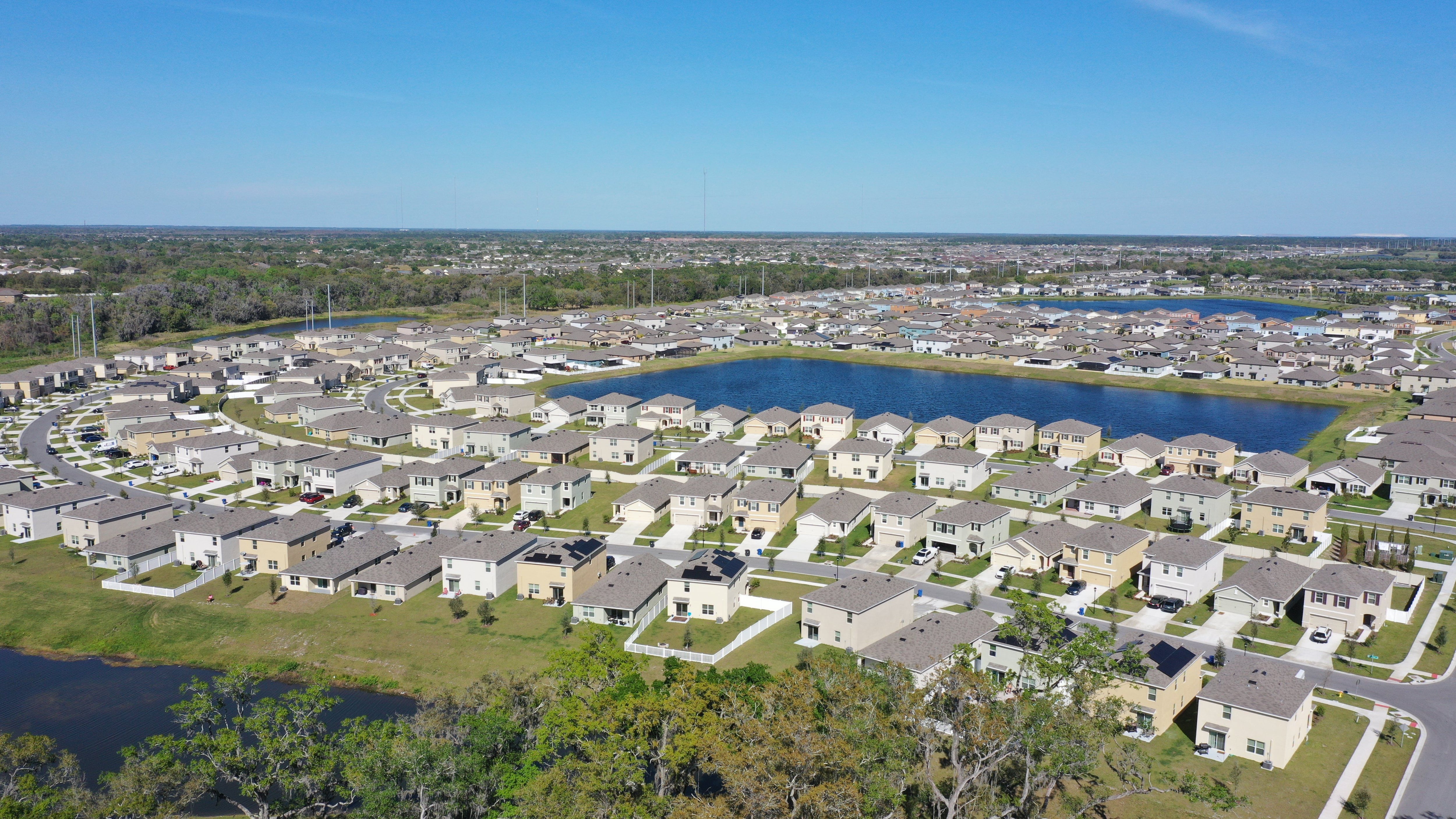
If you're looking at newer communities in Wesley Chapel, Riverview, Land O'Lakes, or Apollo Beach, you'll probably encounter Community Development District (CDD) fees.
CDDs are special taxing districts that fund infrastructure for newer developments - roads, water lines, drainage systems, parks. They show up on your tax bill as a separate line item, typically $100-$200/month (sometimes more), and they last for 20-30 years.
They're non-negotiable and non-optional. You can't appeal them. You can't opt out. They're baked into the community.
The frustrating part: builders don't always make CDD fees obvious during the sales process. Always ask. Always verify.
HOA fees - and why they're climbing
Tampa Bay HOA fees vary wildly depending on what type of property you're buying:
- Typical suburban HOA: $250-$400/month
- Luxury or condo HOA: $500-$800+/month
- Tampa median condo HOA: approximately $614/month
- Ultra-luxury communities: up to $2,000/month
And here's the kicker: Florida has no cap on HOA fee increases.
HOA fees have been surging across Tampa Bay due to 40%+ insurance cost increases, new state-mandated reserve funding requirements (post-Surfside legislation), and the rising cost of maintaining common areas and building exteriors.
Before you buy in an HOA community, request the budget, reserve study, and meeting minutes from the last 12 months. Look for any upcoming special assessments. I've seen buyers get hit with $10,000-$30,000 special assessments within months of closing because they didn't review these documents.
Closing costs - the one-time hit
Buyers in Florida typically pay 2-5% of the purchase price in closing costs. On a $400K home, that's $8,000-$20,000.
Florida-specific costs include:
- Documentary Stamp Tax on mortgage: $0.35 per $100 of loan amount
- Intangible Tax on mortgage: $0.20 per $100
- Title insurance: ~$1,000 on a $300K policy
- Lender fees, appraisal, inspections: variable
In most Florida counties, the seller pays for the owner's title insurance policy. But everything is negotiable in this market.
Costs that surprise out-of-state buyers
If you're moving to Tampa Bay from out of state, here are the Florida-specific costs that catch people completely off guard:
Roof replacement just to get insured. If the home has a roof older than 15 years, you may need to replace it ($10,000-$25,000+) before any insurer will write a policy. Some buyers discover this during due diligence and walk away.
Pest control. Florida's climate makes pest management essential, not optional. Budget $30-$50/month for ongoing service. Termite bonds can run $200-$500/year.
Hurricane preparedness. Impact windows ($10,000-$25,000 for a whole house), hurricane shutters ($2,000-$5,000), generators ($3,000-$10,000 installed). These aren't luxuries here. They're necessities that also lower your insurance.
The 50% rule in flood zones. If your home is in a flood zone and you need repairs exceeding 50% of the home's value, the property must be brought up to current building code - including elevation above base flood elevation. That can mean $50,000-$100,000+ in additional costs. This matters enormously for older homes near the water.
The no-state-income-tax advantage is real and substantial. A $100K earner saves roughly $6,188/year vs. New York state tax. A $150K NYC earner saves approximately $16,000/year when you factor in city tax too. But don't let tax savings blind you to the total cost of ownership. Florida's hidden costs can eat into that advantage fast if you're not prepared.
How to protect yourself
Here's what I tell every buyer I work with:
Get insurance quotes before you make an offer. Not after. Not during inspection. Before. Know what insurance will cost on any home you're seriously considering.
Ask about CDD fees explicitly. They don't always appear in the listing. Ask the listing agent, check the county property appraiser site, and verify the amount and remaining term.
Request full HOA financials. Budget, reserve study, and recent meeting minutes. Look for deferred maintenance, underfunded reserves, and upcoming assessments.
Calculate the FULL monthly cost. Mortgage + taxes + insurance + flood insurance + HOA + CDD. That's your real number. If that number doesn't work, the house doesn't work - no matter how much you love the kitchen.
File your homestead exemption immediately after closing. March 1 deadline. Don't miss it.
I walk all of my clients through this full cost breakdown before we start looking at homes. Because falling in love with a house you can't actually afford isn't fun for anyone.
Ready to get the real numbers on what you can afford in Tampa Bay? Let's talk.








%2520(1).webp)




.svg)
.svg)