
.svg)


Let me tell you about a conversation I had last month with a homeowner in Tampa Heights. She showed me her 2026 insurance renewal: $14,523 per year for a 1913 bungalow. That's over $1,200 a month just for homeowners insurance - before the mortgage, before property taxes, before flood insurance.
She wasn't an outlier. She was the norm.
Florida homeowners pay roughly 102% more than the national average for property insurance. The statewide average sits around $3,748/year, but for standard $300K dwelling coverage, you're looking at $5,376-$5,409/year. Compare that to the national average of about $2,181.
If you're buying a home in Tampa Bay - or you already own one - insurance isn't a line item. It's a major financial decision that can make or break your monthly budget. Here's what you need to know.
How we got here
Florida's insurance crisis didn't happen overnight. It was a perfect storm of factors:
Hurricanes. Ian in 2022. Nicole in 2022. Idalia in 2023. Helene and Milton in 2024. Each storm cycle drives carriers further into losses and pushes reinsurance costs higher.
Litigation abuse. For years, Florida was ground zero for roofing scams and assignment-of-benefits abuse. Contractors would knock on doors after storms, sign over insurance claims, and then sue carriers for inflated amounts. The legal costs were astronomical.
Carriers fleeing the state. Between 2020-2023, multiple national carriers pulled out of Florida entirely. Others went insolvent. That left fewer options and less competition.
The result: premiums that make homeownership significantly more expensive than the mortgage payment alone would suggest.
The good news - and there is some
Here's what a lot of the doom-and-gloom articles aren't telling you: the market is actually improving.
In December 2022, Florida passed SB 2A, which eliminated one-way attorney fees and reformed assignment-of-benefits abuse. The impact has been dramatic:
- Citizens Property Insurance (the state insurer of last resort) saw enrollment crash from a peak of 1.42 million policies in October 2023 to just 427,097 by November 2025 - a 73% drop and the lowest since Citizens was created
- Over 546,000 Citizens policies transferred to private insurers in 2025
- Citizens announced a statewide average rate reduction of 8.7% for spring 2026 renewals
- 17 new property insurers have been approved to enter Florida since the reforms
- Florida domestic carriers collectively returned to underwriting profit in 2024 - the first time since 2015
- Reinsurance pricing declined 10.7% at the June 2025 renewal cycle
Insurance Commissioner Michael Yaworsky said in early 2025 that Florida's market is the healthiest it's been in more than a decade. The numbers support that.
That doesn't mean your bill is cheap. It means the trajectory is finally heading in the right direction.
Flood insurance - the second bill nobody budgets for
Here's what catches people off guard, especially buyers relocating from out of state: homeowners insurance doesn't cover flooding. It's a completely separate policy.
The statewide NFIP (National Flood Insurance Program) average runs $853-$878/year. But in Tampa Bay, your actual cost depends heavily on your flood zone and proximity to water:
- Moderate-risk zones: $700-$1,800/year
- High-risk coastal areas: $2,500-$10,000+/year
FEMA's Risk Rating 2.0 system changed the game. Instead of simple zone-based pricing, your rate now factors in distance to water, property elevation, replacement cost, and historical flood claims in your area.
28% of flood claims nationally come from areas NOT in designated Special Flood Hazard Areas. Being outside a flood zone doesn't mean being safe from flooding. Hurricane Helene proved that painfully for thousands of Tampa Bay homeowners in 2024.
NFIP coverage maxes out at $250,000 for the building and $100,000 for contents. If your home is worth more than that, you need supplemental private flood coverage.
And here's a change most people don't know about: starting January 1, 2027, all Citizens policyholders will be required to carry flood insurance, regardless of flood zone.
Tampa Bay CRS discounts most people don't know about
This is one of the most underutilized money-saving programs in Tampa Bay. The Community Rating System (CRS) rewards communities that go above and beyond FEMA's minimum floodplain management requirements, and the discounts are significant:
- City of Tampa: Class 5 = 25% discount on NFIP flood premiums
- City of St. Petersburg: Class 5 = 25% discount
- Unincorporated Pinellas County: Class 2 = 40% discount (among the highest in all of Florida)
These discounts apply automatically to NFIP policies, but I've seen plenty of homeowners who don't realize they're eligible or who haven't verified their discount is being applied correctly. Check your flood policy.
7 concrete ways to lower your insurance costs
1. Shop aggressively - right now
With 17 new carriers in the market, competition is real for the first time in years. Insurance agents are reporting savings of up to 50% for clients who switch carriers. Don't auto-renew without getting at least 3-4 quotes.
2. Get a wind mitigation inspection
This is the single highest-ROI move for most Tampa Bay homeowners. The OIR-B1-1802 form documents your home's wind resistance features - roof shape, roof deck attachment, secondary water resistance, opening protection. Discounts range from 10-45% off your premium depending on what features your home has. The inspection costs $75-$150 and often pays for itself within the first month.
3. Apply for My Safe Florida Home grants
The state program offers up to $10,000 in matching grants for hurricane-hardening improvements like impact windows, reinforced garage doors, and roof upgrades. There's a waitlist, but it's worth applying.
4. Address your roof
This is the big one. If your roof is 15+ years old, insurers can non-renew your policy under Florida statute 627.7011. And older roofs get dramatically worse rates even if you can find coverage. A new roof is expensive ($10,000-$25,000+) but can cut your insurance premium by 30-50% and make your home insurable by more carriers.
5. Raise your hurricane deductible
Typical hurricane deductibles are 2-5% of your dwelling value. Moving from 2% to 5% on a $400K home (from $8,000 to $20,000 out of pocket in a claim) can meaningfully reduce your annual premium. Just make sure you can actually afford the higher deductible if you need it.
6. Install impact protection
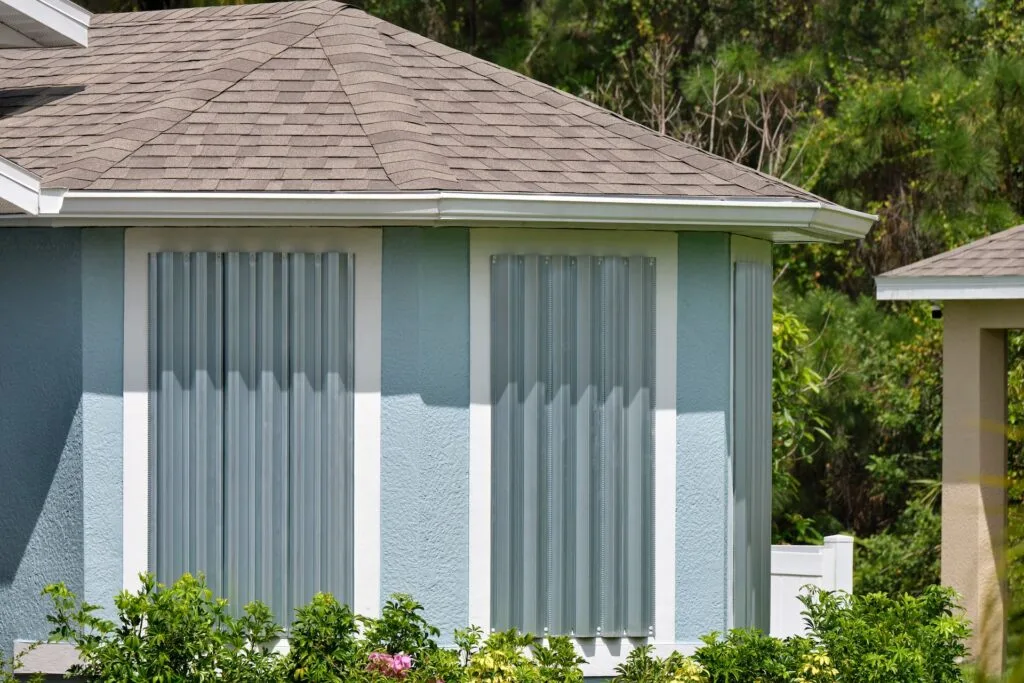
Impact-rated windows, doors, and hurricane shutters qualify for wind mitigation credits that directly reduce your premium. They also protect your home. Win-win.
7. Verify your CRS flood discount
As mentioned above, Tampa and St. Pete residents get 25% off NFIP flood premiums. Unincorporated Pinellas gets 40%. Make sure your policy reflects the correct discount for your municipality.
When you're shopping for a home, always get insurance quotes BEFORE you make an offer. I've seen deals fall apart because buyers didn't realize their dream house would cost $8,000+/year to insure. Know the number up front. I help my clients build insurance into their home search criteria from day one.
The bottom line
Florida insurance is expensive. That's not going to change overnight. But the market is measurably improving, and there are real, concrete steps you can take to reduce your costs.
The worst thing you can do is ignore it. The second worst thing is to go bare (uninsured) - which an estimated 15-20% of Florida homeowners are now doing. That's a gamble I'd never recommend.
If you're buying in Tampa Bay, insurance needs to be part of your budget from day one - not an afterthought. And if you're already a homeowner, a wind mitigation inspection and some aggressive shopping could save you thousands.
Have questions about how insurance affects your home search or your home's value? Let's talk.





%2520(1).webp)











.svg)
.svg)