
.svg)



For the past four years, the conversation about buying a home in Tampa Bay has been dominated by one thing that has nothing to do with the house itself: insurance.
I've watched buyers fall in love with a home, run the numbers, and then go pale when they see the insurance quote. I've seen deals collapse because the annual premium was higher than the property taxes. I've had sellers blindsided when buyers backed out over carrying costs they didn't see coming.
But here's the thing - the story is changing. For the first time in years, there's actually good news on the insurance front. And if you're buying in Tampa Bay in 2026, you need to understand exactly what's happening, what it costs, and how to protect yourself.
The crisis - and why it happened
Let's start with the ugly truth. Florida homeowners pay an average of $5,376 per year for $300,000 in dwelling coverage - roughly 2.5 times the national average of $2,181. In coastal Pinellas County with an older roof, premiums can range from $7,000 to $19,000+ annually.
How did it get this bad? Florida accounted for less than 11% of all U.S. homeowners insurance claims but generated roughly 73-80% of all homeowners insurance lawsuits nationwide. That's not a typo. Assignment-of-benefits abuse and one-way attorney fees created a litigation machine that drove 10+ insurers out of the state or into insolvency between 2020 and 2023.
Then Hurricanes Helene and Milton hit in 2024, causing an estimated $5 billion in combined residential damage across Hillsborough and Pinellas counties alone. Insurance companies that were already bleeding money saw their reserves decimated further.
The result? Citizens Property Insurance - Florida's insurer of last resort - ballooned to over 1.4 million policies at its peak. Rates were climbing 20-30% annually. Some Tampa Bay homeowners saw their premiums triple in three years.
The turnaround is real - here are the numbers
Florida's 2022 tort reforms eliminated one-way attorney fees and cracked down on assignment-of-benefits abuse. It took time for the effects to show up, but they're showing up now in a big way.
In January 2026, Governor DeSantis announced statewide insurance rate relief with an average 8.7% reduction for Citizens policyholders. Over 330,000 policyholders across all 67 counties will see rate decreases, with more than 150,000 getting reductions of 10% or more.
But it's not just Citizens. Private carriers are cutting rates too:
State Farm: Average decrease of 10.1%, with cumulative reductions approaching 20%.
Florida Peninsula: Average reduction of 8.4%.
Patriot Select: Premiums down 11.3%.
Security First: Filed for an 8% statewide rate decrease.
Heritage Property & Casualty: Approved reductions of 7-9.6% depending on county.
Universal Property & Casualty: Down 5.1%.
After years of carriers fleeing the state, 17 new insurance companies have entered Florida since the reforms. Citizens' policy count has dropped 76% from its peak - the largest return to private market coverage in a decade.
Insurance litigation is down roughly 70% since the reforms took effect. Actual losses are trending below projections. Reinsurance costs are declining. The market is stabilizing.
What Tampa Bay buyers should actually budget
Good news aside, Florida insurance is still expensive. Here's what realistic budgeting looks like for a Tampa Bay home purchase in 2026.
Homeowners insurance (HO-3/HO-6): Budget $3,000-$5,000 annually for a standard single-family home in Hillsborough County. Pinellas County coastal properties: $4,000-$7,000+. The biggest variables are roof age, construction type, and distance from coast.
Flood insurance: This is separate from your homeowners policy and it catches people off guard. If you're in a Special Flood Hazard Area (Zone AE or VE), your lender will require it. NFIP Florida average runs $853-$878/year, but Tampa Bay moderate-risk zones can be $700-$1,800/year and high-risk coastal areas can hit $2,500-$10,000+.
Hurricane deductible: This is the one that nobody talks about until it's too late. Your hurricane deductible is typically 2-5% of your dwelling coverage. On a $400,000 home, that's $8,000-$20,000 out of pocket before insurance pays a dime for hurricane damage. Make sure you can cover that.
Here's what a realistic monthly budget looks like for a $400,000 home purchase:
Mortgage (6.65%, 20% down): ~$2,050/mo
Property taxes: ~$490/mo
Homeowners insurance: ~$350/mo
Flood insurance (if applicable): ~$100-200/mo
HOA/CDD (if applicable): ~$150-400/mo
Total monthly carrying cost: $3,140-$3,490
That insurance line item is why I tell every buyer: get insurance quotes before you fall in love with a house. Not after.
Five moves that can save you thousands
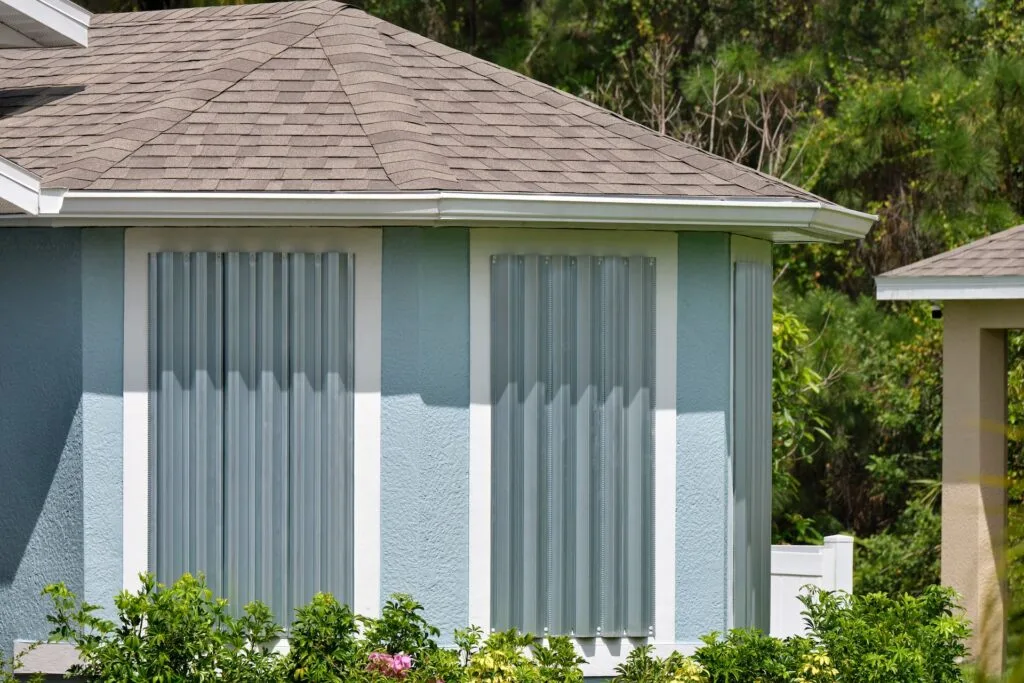
1. Get a wind mitigation inspection before you close. This is a $75-$150 inspection that documents your home's hurricane-resistant features. Florida law requires insurers to offer discounts for things like hip roofs, hurricane shutters, and impact-resistant windows. Savings can be 20-45% on your wind premium.
2. Check the roof age immediately. Most Florida insurers won't write a policy on a roof older than 15-20 years. If the home you're eyeing has a 2005 roof, factor in a $15,000-$25,000 replacement cost. Some sellers in this market are replacing roofs pre-listing to make their homes insurable. Ask about it.
3. Know your CRS discount. Tampa, St. Pete, and Clearwater all earn Class 5 Community Rating System scores, which means a 25% discount on NFIP flood insurance premiums for properties in flood zones. Unincorporated Pinellas County has an even better Class 2 rating. Not every agent knows to tell you this.
4. Apply for My Safe Florida Home. This state program provides matching grants up to $10,000 for hurricane hardening improvements - impact windows, roof upgrades, garage door reinforcement. The improvements pay for themselves through insurance savings, and the program has been expanding.
5. Shop aggressively. With 17 new carriers in the market and incumbents cutting rates, this is the most competitive Florida insurance market in years. Don't just take the first quote. Work with an independent insurance agent who can shop multiple carriers. The spread between the cheapest and most expensive quote for the same home can easily be $2,000-$3,000 per year.
The bottom line for 2026
Florida home insurance is still expensive compared to the rest of the country. That's not going to change overnight. But the trajectory has genuinely reversed for the first time since the crisis began.
If you've been putting off a Tampa Bay home purchase because of insurance costs, the math is getting better - not worse. Rates are falling, competition is increasing, and the reforms appear to be working.
The key is to build insurance into your budget from day one - not as an afterthought, but as a core part of your purchase decision. Know your flood zone. Get wind mitigation quotes. Understand your hurricane deductible. And work with someone who will show you the real numbers before you make an offer.
That's how I operate. No surprises. Just data.






%2520(1).webp)









.svg)
.svg)